


Finding their ‘clever’ - how Australians are navigating AI and trends like rentvesting to get their foot on the property ladder.
Once you’ve moved in, homeownership doesn’t stop evolving. That's why at Great Southern Bank, we're focused on supporting Australians at every stage along the way. Our No Place Like Home series follows how attitudes and experiences shift as people move through the homeownership journey.
In this third annual instalment, we turn our attention to the 'After' phase of homeownership; when the keys are finally in hand and the realities of owning a home begin. This year, we explore how Australians are preparing their homes and finances for the future - from investing in energy efficiency and resilience to navigating climate risk, larger deposit requirements and longer pathways to homeownership. And we ask the question: when you are living in your ‘After’ home, who are the neighbours you want to share that journey with you?
A word from our Chief Customer Officer
There's a lot to think about once you’ve bought a home and are looking ahead. Increasingly, that thinking extends well beyond home loan repayments.
This year's report shows just how carefully Australians are thinking about the future. More households are weighing up the cost of climate risk, from flood and bushfire exposure to rising insurance premiums, and are increasingly valuing homes that already come fitted with renewable features like solar and battery storage.
The cost of getting into the market is also playing a bigger role in how people plan ahead. Younger Australians are saving larger deposits than the generations before them and many homeowners are rethinking their retirement timelines as they weigh up mortgage repayments against long-term goals.
It's a good reminder that owning a home isn't a finish line, it's an ongoing balancing act between today's costs and tomorrow's plans. We're proud to keep backing Australians through every stage of that journey.
Rolf Stromsoe
Chief Customer Officer, Great Southern Bank
Renewable upgrades are rising
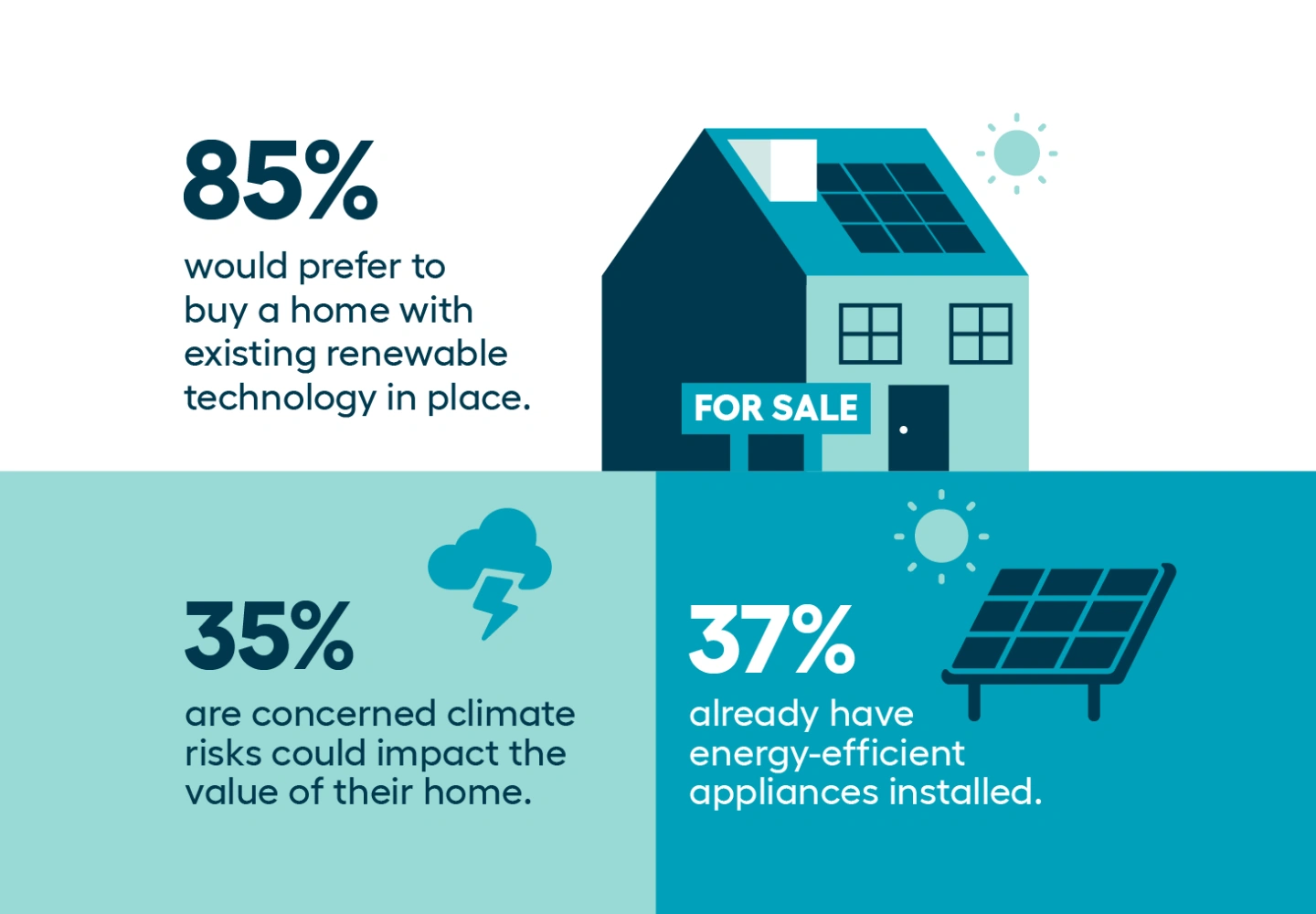
Climate risk, household running costs and long-term property values are all influencing how people think about the homes they buy and the improvements they make once they move in. The overwhelming majority (85 per cent) would prefer to buy a home that already has renewable technology installed. More than one in three (35 per cent) are concerned that natural disasters and climbing insurance costs could chip away at their home's value over the next decade.
For many, the upgrades are already underway. The most common features already installed include:
- Energy-efficient appliances (37 per cent)
- Solar panels (35 per cent)
- Battery storage (14 per cent)
The next wave of investment tells a similar story. Over the coming five years, the sustainable upgrades Australians are most keen to add are:
- Battery storage (30 per cent)
- Energy-efficient appliances (29 per cent)
- Solar panels (28 per cent)
Together, these findings suggest Australians are increasingly investing in upgrades that improve comfort today while helping future proof their homes for tomorrow.
To support customers investing in more energy-efficient homes, Great Southern Bank offers green personal loans for eligible products such as solar panels, battery packs and rainwater tanks, as well as a green home offer. We also offer car loans for eligible electric or hybrid vehicles.
Bigger deposits for younger Aussies and a longer road to retirement
The cost of getting (and staying) on the property ladder is influencing everything from deposit size to retirement plans. Even as the price of entry climbs, homeowners are holding onto their confidence about paying off their loans.
More than half of mortgage holders (54 per cent) feel fairly or very confident they'll clear their home loan within its original term.
The deposits themselves tell a generational story:
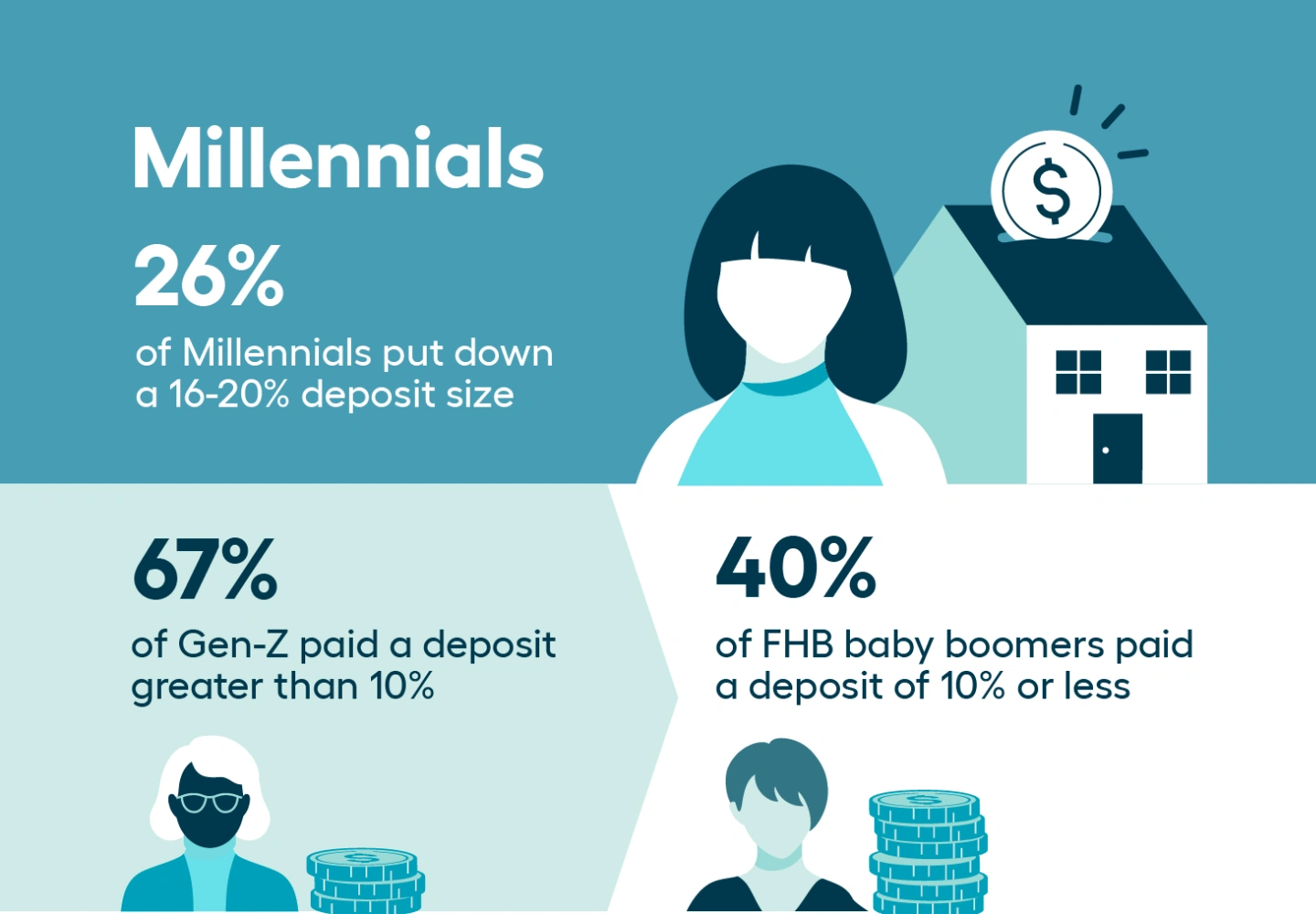
- Gen Z: most paid 11-15 per cent (23 per cent) or 16-20 per cent (21 per cent) for their first home
- Millennials: typically put down a 16-20 per cent deposit (26 per cent)
- Baby Boomers: paid a lower deposit of 5-10 per cent (34 per cent), with only 15 per cent reaching 16-20 per cent
Homeownership is also influencing Australians' longer-term financial plans. Bigger financial commitments up front are having knock-on effects further down the track. Four in five Australians (80 per cent) expect cost-of-living pressures to push back their retirement, most commonly by three to five years (22 per cent) or five to ten years (21 per cent).
Family continues to help bridge the gap too. Among Gen Z homeowners who received financial support from their parents, one in five (20 per cent) plan to pay it back as soon as they can, while just eight per cent think they won't be able to repay it at all.
The ultimate neighbour
Future-proofing a home isn't only about the property itself, it also means feeling connected to the community around it.
What makes the ultimate neighbour? For most Australians, it's not about becoming best friends but about finding the right balance between connection and privacy.
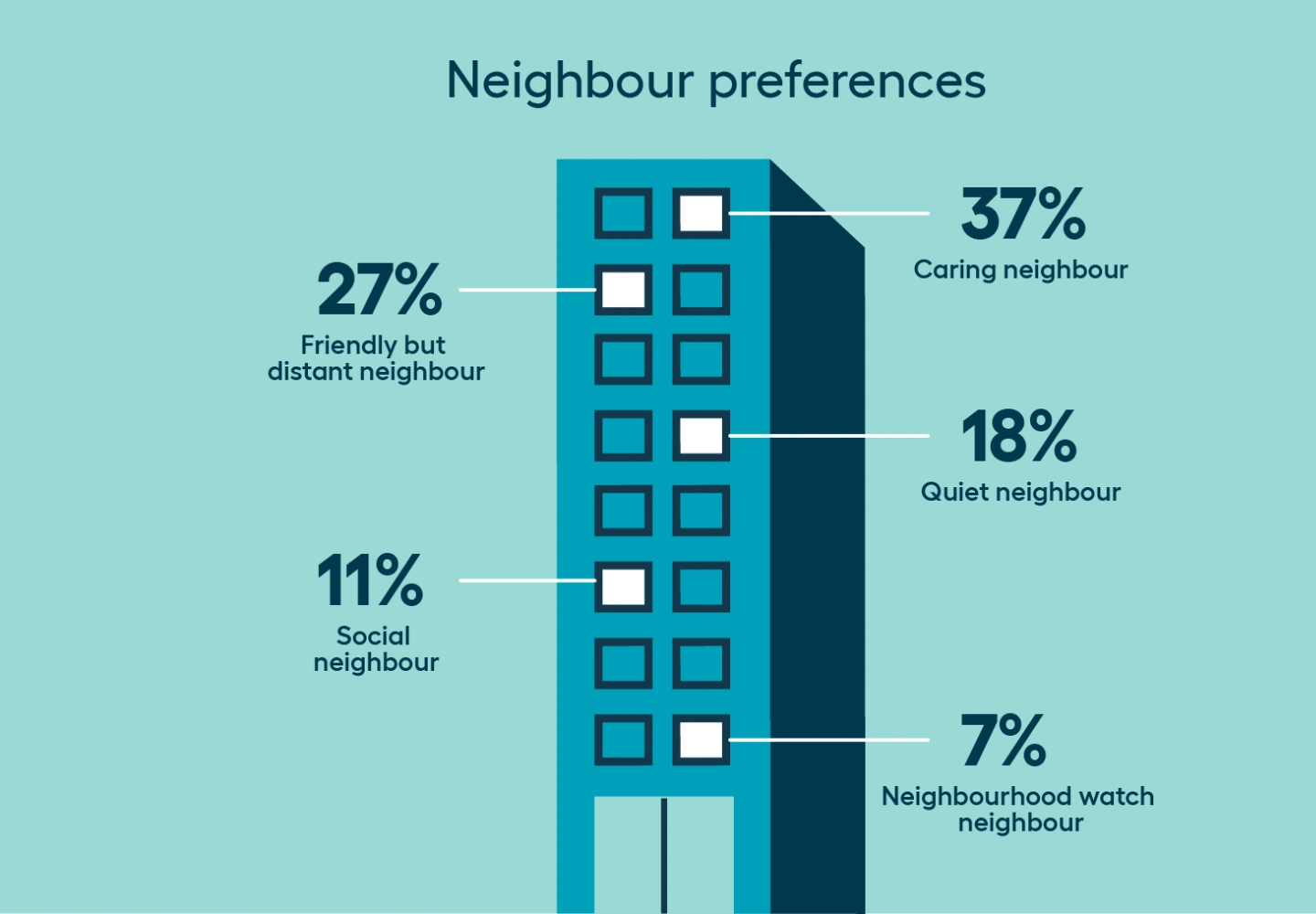
Our research found that more than a third of Australians (37 per cent) prefer a caring neighbour who makes them feel welcome and part of the community. Close behind, 27 per cent would rather have a friendly-but-distant neighbour, someone who introduces themselves once and is never really heard from again.
Some Australians prefer even more space. Almost 1 in 5 (18 per cent) like a quiet neighbour they rarely hear from at all, while just 11 per cent are after a more social connection, welcoming neighbours over for gatherings.
Only a small minority (seven per cent) want a neighbourhood-watch type who's across everything happening on the street. Proof that when it comes to community, most Australians are looking for warmth without the watchful eye.
Case study: investing now for the future
When Matt Byrne and his family moved into their East Brisbane home, installing solar panels and a battery system wasn't an afterthought, it was one of their first priorities.
Having experienced the benefits in their previous home, they wanted to reduce their energy bills and prepare for the future.
"Installing solar and a battery was one of our top priorities after moving in because we'd already seen the benefits in our previous home," Matt says.
"We knew we wanted to continue to offset our energy use and reduce bills, especially during summer when we're running the air conditioning more often. The battery is also a great investment that gives us peace of mind during storm season and any power outages that might occur."
Brisbane electrician Josh Thompson has seen Australians make the shift to renewable energy solutions first-hand.
“More customers are choosing to install a battery alongside their solar system rather than adding one later,” Josh says.
“The technology and quality have improved, prices have become more affordable with the rebate program, and people feel more confident after seeing friends, family and neighbours make the switch."
For Matt, planning for future energy needs was also important, and he’s making every kilowatt count
"We decided to go with a larger system because you only receive the rebate once, and we're planning ahead. When we're ready to buy an electric vehicle, we'll already have the capacity to install an EV charger."
Other reports in the series
7 minutes
How AI is shaping Australians’ financial futures (April 2026)
7 minutes
Home is where the happy is (November 2025)
Discover Australia’s link between home and happiness in our latest No Place Like Home report.
8 minutes
How confident are Australians about their financial future? (August 2025)
Discover what’s shaping their long-term goals, aspirations, and sense of financial wellbeing. Get the full picture in our latest report.
For more information
For inquiries, interview requests or for permission to cite the research, please contact:
Important Information
The Great Southern Bank No Place Like Home Report is a three-part series, with online surveys to be conducted in three waves across the year. The research was conducted by The Clever Stuff , in partnership with Pure Profile, surveying 2,018 Australians aged 18-65 who are nationally representative of the Australian population by age, gender and location. The survey was conducted from 28 May 2026 to 9 June 2026.